
dry leaf
how wonderful it is that there are roads

It’s hot in London. I’ve barely left the house for the past week, spending my time in front of the portable AC unit. When I went out yesterday evening, at first I thought well, this isn’t as bad as I expected, and then within about two minutes I’m drenched in sweat. I get the Central Line a few stops and feel like I might die. Then I get the Elizabeth Line to Tottenham Court Road and feel less like I might die, but as soon as I’m out on the streets again I feel closer to death. It’s a lot. Toby and I meet at Wong Kei, a restaurant in which I’ve never even glanced at the menu because someone else always orders and we always get the same thing. Meat on rice, wonton soup, Malaysian morning glory. We don’t touch the hot tea. Toby hasn’t slept at all for the past few days — no AC for him — and, uncharacteristically, he’s decided to try and get through the heat exhaustion by drinking heavily. He keeps getting lost in the middle of his sentences. After the meal, we’re walking to the ICA and he’s looking at the weather forecast on his phone. He nearly walks into a large and very sweaty middle aged man just as he shouts ‘FUCKING HELL!’ after seeing that the temperature isn’t getting under 23ºC for the next few nights. The man is not pleased. Toby narrowly avoids an altercation. We drink some more beers at the bar at the ICA, sitting in front of a pathetic fan. The cinema screen is slightly air-conditioned, but insufficiently.
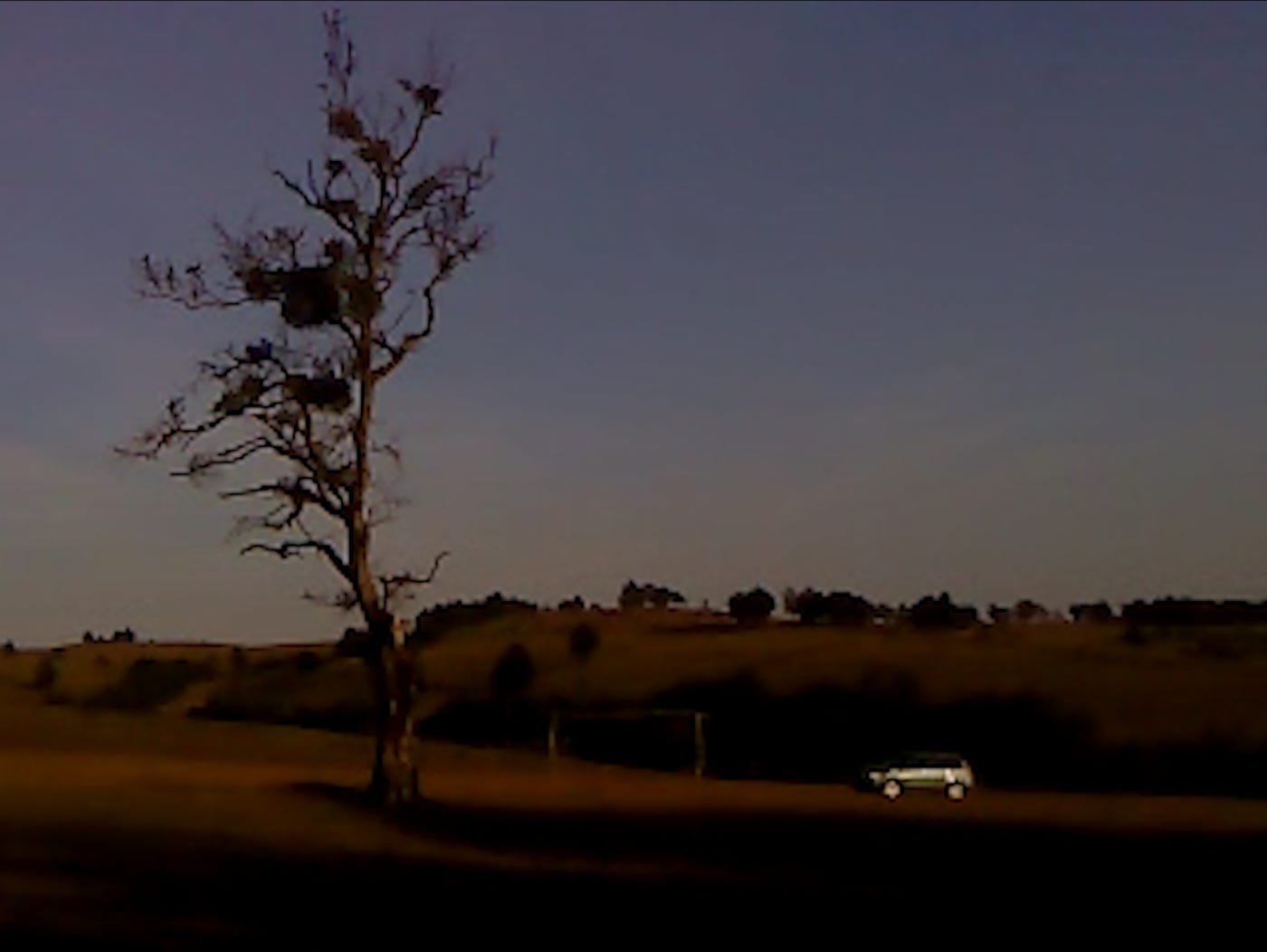
We watch Dry Leaf (dir. Alexandre Koberidze, 2025), a three-hour Georgian road movie about a father, Irakli, trying to find his daughter, Lisa, a sports photographer who has left her parents a letter saying she’s going to disappear for a little while, but she’ll be in touch soon. Irakli goes to speak to her editor, who says she has an unfinished project: she was going to travel around the country photographing village football fields. Maybe Irakli can speak to the journalist who was going to write the accompanying article? Irakli finds the journalist, Levin, who happens to be invisible, and he says that he and Lisa already done the trip, can’t quite remember where they went, but he’s happy to accompany Irakli to the places Lisa photographed in case they can find anyone who saw her. They don’t find anyone. Eventually they stop at a roadside pottery, and the woman there hands Irakli a letter left by Lisa, giving him directions to her house. The search — as is the case in the road movies that clearly influenced Dry Leaf, like Wim Wenders’ early trilogy (Alice in the Cities, Wrong Move, Kings of the Road) — is a MacGuffin. The film is really about landscape, or contemporary Georgian politics, or animals, or football, or the nature of looking, or happiness, or childhood, or innocence, or love, or, or, or.
Dry Leaf was shot on a Sony Ericsson W395, a phone released in 2009. The camera on the Sony Ericsson W395 can capture image in 240p. This means it has eighty-two times less resolution than something in 4K. I don’t really know or care about the technicalities of resolution or how it works, but I’ve watched enough poorly-buffered videos on the internet to know that usually 240p is undesirable. The higher the number the better, right? But Dry Leaf has made me reconsider that. Maybe 240p is enough. Maybe we don't need crystal-clear or razor-sharp images. Maybe that’s not how the world really looks: too clear, too ‘perfect’, too precise, too detailed. Koberidze’s compositions — his use of framing and panning and the occasional gentle zoom — are sometimes astonishingly beautiful, evidence of his deep care for and attention to the small, easily-missed details of the countryside, and the enigma of animals, of which there are many in this films (dogs, horses, donkeys, a cat — the animals feel as equally present and characterful as the people, many of whom, not just Levin, are invisible in front of the camera, even though we hear their voices).
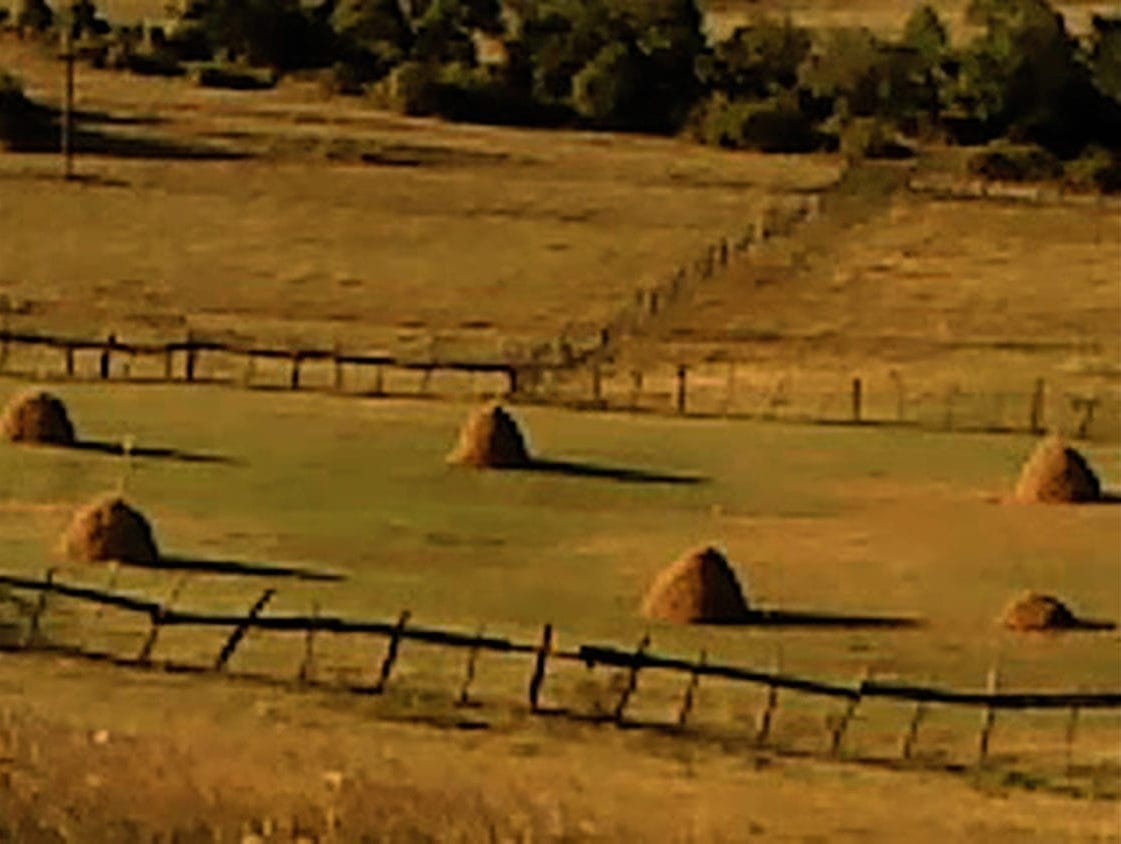
The obvious word to use to describe the visual techniques of Dry Leaf would be ‘painterly’, the obvious comparison to Seurat — pixellated pointillism. I also thought about Renoir, Manet, Pisarro, Cezanne. But maybe it’s closest in spirit to late Courbet, especially the landscapes and still lives he painted after he was released from prison following his involvement in the Paris Commune. Rough, spontaneous, based on direct observation rather than academic conventions, shot through with both political disappointment and with a genuine love of the world. Koberidze is an active participant in protests against the influence of the Russian government in Georgia, and he’s said in interviews that while a Dry Leaf was originally funded by the Georgian National Film Centre, he’s since begun boycotting the organisation and has severed ties. The rural football fields he films — improvised, spontaneous spaces that are in unlikely places, sometimes the only flat open areas in mountainous regions, which aren’t tended to by the state but by the children who play there — are allegories for both the failure of Georgian politics and the irrepressibility of humanity. There’s an ambivalent tenderness throughout the entire film, melancholy and gentle and loving, which Irakli embodies in his search for his daughter and the way he talks to the children he finds across the country, sitting by the side of the road with a ball, waiting for their friends to show up so they can play.
It’s a beautiful, moving film. And it’s a testament to Koberidze’s skill that quite soon you feel like the low-resolution image is not a gimmick, but essential. Even more surprisingly, the fact that a number of people in the film are invisible doesn’t feel cutesy, or contrived, and doesn’t demand explanation. It’s just the way things are in this world. Almost immediately, I trusted the film, trusted that Koberidze was taking me somewhere new and surprising, and had good reasons for making the choices he had about technique. I loved it. Go and see it in a cinema, and be immersed in the grainy, blurry, pixellated mystery of life on this confusing and gentle earth.
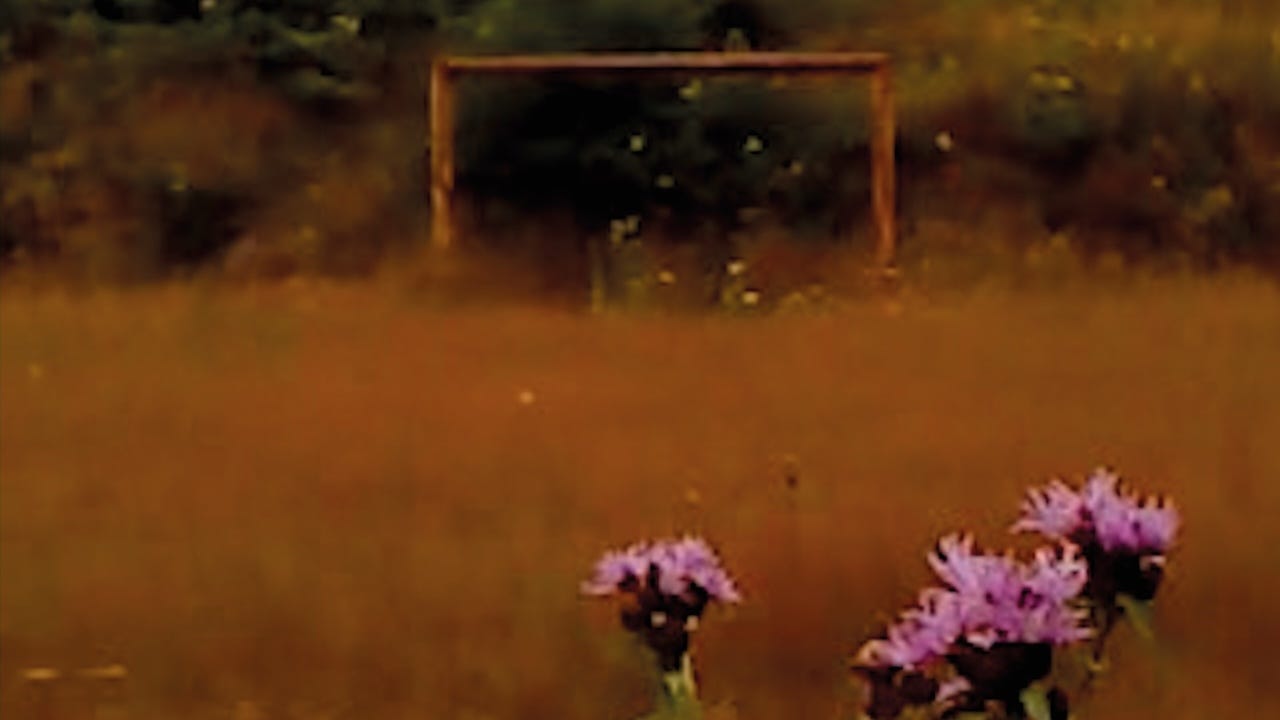
sometimes when I've smoked too much or something too strong, and have had a bad high, the day after everything has looked HD, or 4K. I don't know what the difference is. But it's that uncanny crystal clear look of modern quality videos, like everything is a bit too sped up. I wonder if anything would give the opposite effect, where everything in the world looked all of a sudden 240p.