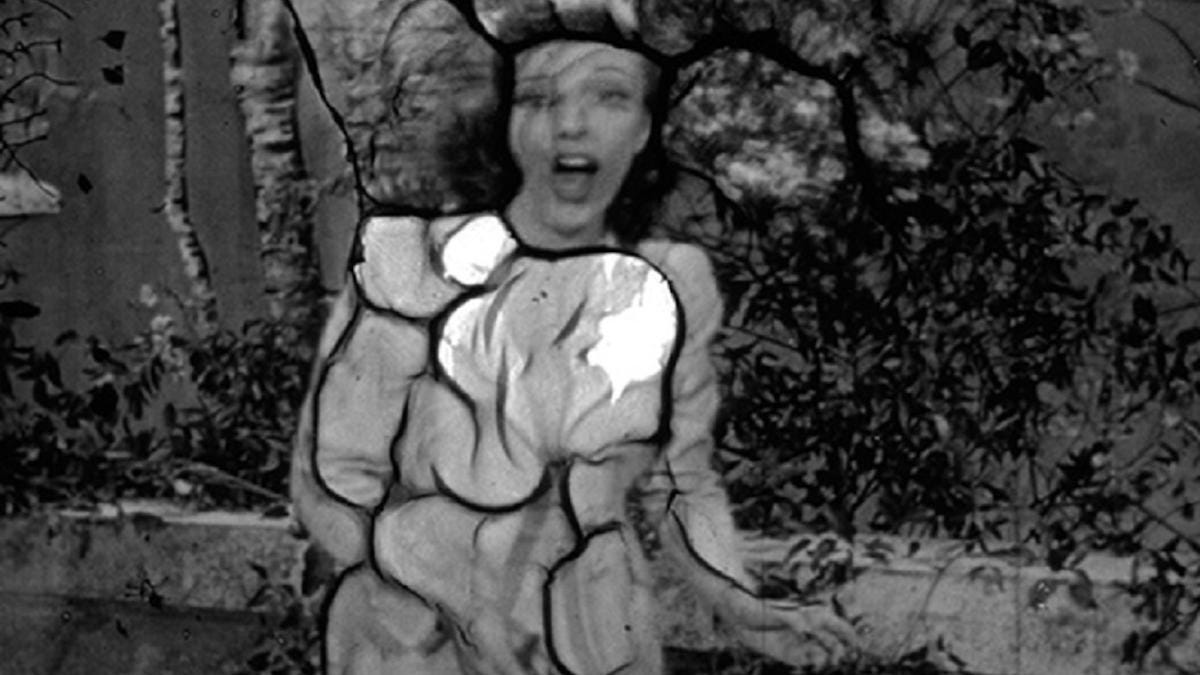
star spangled to death
let's assume this movie is for you. that would mean you hardly stand a chance

I spent all day yesterday in the Barbican, watching Star Spangled to Death (dir. Ken Jacobs, 2004). It’s 436 minutes, so around seven and a quarter hours, but it took more like eight and quarter with (insufficient) breaks. I went with Toby, but he left half way through, after part two of four, saying he was going to buy a staple gun, which he’d rather do than sit through any more of it. He said he’d spent most of the second section thinking about all the other four hour films he could watch instead of any more of it. I was hungover from Shiri and Laurie’s wedding the night before and probably would have left at the same time as him, but I had plans to meet Will after the film (eventually, when I got there, I was nearly three quarters of an hour late) and thought, well, I might as well stick it out; all I’d be doing otherwise is wandering around pointlessly, maybe I can go to sleep for a bit if I need to. I didn’t go to sleep at all, in the end, and I stayed awake to the bitter end. I can’t say the same for a lot of the other attendees; probably there were about 20 people left when it finally came to an end, compared to the maybe 40 who had been there clutching a coffee when it started at 11. A guy sitting next to me fell asleep after about five minutes, woke up in the first intermission and left. By the end of the film I was writhing in my seat from impatience and irritation, completely frustrated with Jacobs’ inability to bring this ordeal to a close. This actually helped me get through it, because this rage meant I was fully awake and activated for at least the last hour or so, willing with every fibre of my being for it to be over.
The screening was programmed along with a bunch of other Ken Jacobs films as part of Open City. I went to see one of these selections at Close-Up a few weeks ago, where I sat through Capitalism: Child Labour (14 mins), Seeking the Monkey King (40 mins), Another Occupation (15 mins). I didn’t like this screening much. At the time I think I put it down to not being in a particular open-hearted mood; Jess was away for work and I’d been feeling dispirited about my currently non-existent writing ‘career’. All I seemed to be able to think or talk about was my plan to sand and varnish a floor in my flat. I liked Seeking the Monkey King the most out of these films. It’s mostly an image that looks like Jacobs did some really close shots of some crumpled tin foil and put it through a device for making autostereograms with some abrasive sonic droning in the background. This image is intercut and/or superimposed with white text sans-serif written by Jacobs in the style of Facebook posts fired off by an elderly left-wing crank. Like, I didn’t really disagree with anything he writes in that film, but there’s something about the style of how he’s articulating his positions that felt a bit off to me; kind of curmudgeonly and rigid, hoarse from years of griping.
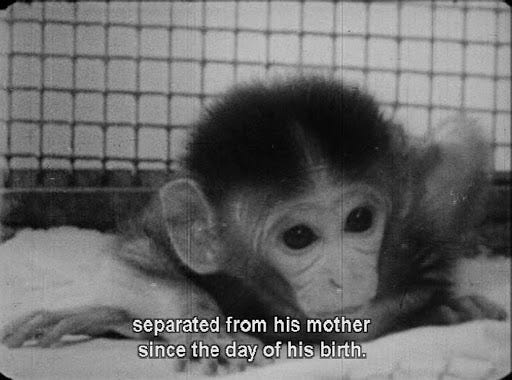
Toby loved that screening, so I was prepared to come to Star Spangled to Death and have my mind changed about Ken Jacobs, major figure of underground cinema that he was. But I was not convinced. It was hard work with little reward. There were moments that I found compelling and horrific and persuasive, but they were few and far between in the preposterous runtime. A lot of the film is found footage, mostly from the 1950s, when Jacobs started work on the film: racist early Mickey Mouse cartoons; particularly racist scenes from Oscar Michaux films; excerpts from Cecil B. deMille’s racist film about the Crusades; training or informational public television broadcastings, including a lengthy section on baby monkeys being tortured and forced into autistic states so we could learn about attachment theory and quantify motherly love; Nixon’s address to camera during his run for Vice President where he gives a full financial statement of all of his earnings to try and dispel a funding scandal; a film about a white colonist couple leaving darkest Africa that sounded like it was narrated by John Wayne; a lot of blackface; a promotional campaign video for Nelson Rockefeller’s presidential campaign. And so on. A lot of this I found fascinating and completely tiresome and deeply uncomfortable. It’s the strongest element of Star Spangled to Death: an attempt to unearth and display the USA’s id as it was expressed through moving image in the first fifty or so years of cinema, in early television. Some really horrendous stuff. I did find myself thinking it was interesting how little of this content was sexual or pornographic, but I guess America was good at actively repressing all that thanks to the Code.
This material felt most effective for me when it was just left to run. But it was intermixed with some experimental street theatre antics that I didn’t connect with at all, starring Jack Smith (of Flaming Creatures, haven’t seen) and a guy called Jerry Sims, who was a kind of New York Baudelaire down-and-out artist. I didn’t like these parts of the film, found them boring and indulgent — in a not particularly productive way — but towards the end I began to understand why they were present: Jacobs, finally finishing the film fifty years after he began it, was grieving his friends, now long dead, and grieving his disagreements with them, the excitement of their shared enterprise and the collapse of it due to financial and technical difficulties and his inability to finish the film. There’s an element of eulogy and regret in these scenes which only becomes apparent in the last half an hour of the film, which manages to recast the whole preceding six and a half hours in a new, melancholy light.
Unfortunately I was too pissed off to really appreciate this at the time, and it’s only landed more clearly with me with a day’s distance from the film. I was pissed off because of Jacobs’ texts. Imagine being trapped in a room for over seven hours with a man who is livid about religion, who is constantly citing conspiratorial books about 9/11 which are self-published on cranky publishing houses, who is determined to have his say, to be heard out completely, seventy years of anger at his nation finally expressed. A lot of the textual intertitles in Star Spangled to Death last for exactly one frame: they flicker in front of you, illegible. You might catch a word or two here or there: “G.I. Bill”, “atrocity”, “Islam”, “unions”, “Auschwitz”. Towards the end of the film, the viewer is advised that now they’ve seen the film, they should buy the DVD so they can go back, watch it again, pause it every time one of these comes up, and read even more of Jacobs’ opinions. This would presumably extend the total runtime of the film to somewhere north of twelve hours. I would be amazed if anyone has ever done this, but I suppose you never know the depths to which fans of experimental cinema will degrade themselves.
In Seeking for the Monkey King, I thought Jacobs’ politics were blunt but basically not wrong. In Star Spangled to Death, I felt like they were a kind of artefact from a particular moment of American history: post-9/11, Iraq War, anti-Bush, hardline atheism. Watching from 2026, this moment feels quaint, but also kind of queasy. Being vocally anti-religion, in the way that Jacobs’ is, is no longer acceptable in the way it might have been then. It feels like an adolescent position to me, but that’s probably because I was an adolescent then. Dawkins and Hitchens in the air. In a way I felt like the fixations of the 2004-Jacobs were more alien to me, harder to accept, than the horror and disgust he expressed towards the blackface and political propaganda of the 1950s, the smooth, artificial, white-toothed cheeriness of American exceptionalism and reaction in the McCarthy era. But the recent past is uncanny and nauseating; the distant past of all of seventy years ago is safely contained in its malignancy.
My main feeling after Star Spangled to Death was that the work is a failure. That’s fine — to be expected in some ways. You can’t make truly experimental art of any kind without the risk of failure: it wouldn’t be an experiment otherwise. I was thinking for a while of Peter Watkins, and his efforts to make work that stood in opposition to what he called the monoform. Star Spangled to Death is a film which tries to expose the evil that is in the unconscious of the American monoform, and, at the same time, through its street theatre scenes, through its editorial gambits, through its aggressive length and completely unreasonable, hostile demands on the viewer, tries to suggest an alternative path for visual culture and moving image. It’s hard enough to do one of those things, let alone both. It’s amazing to even try. I didn’t like Star Spangled to Death, but I don’t think I was supposed to — I don’t think anyone could really like what this film is trying to do, and certainly not what it’s trying to show.